
Quick answer
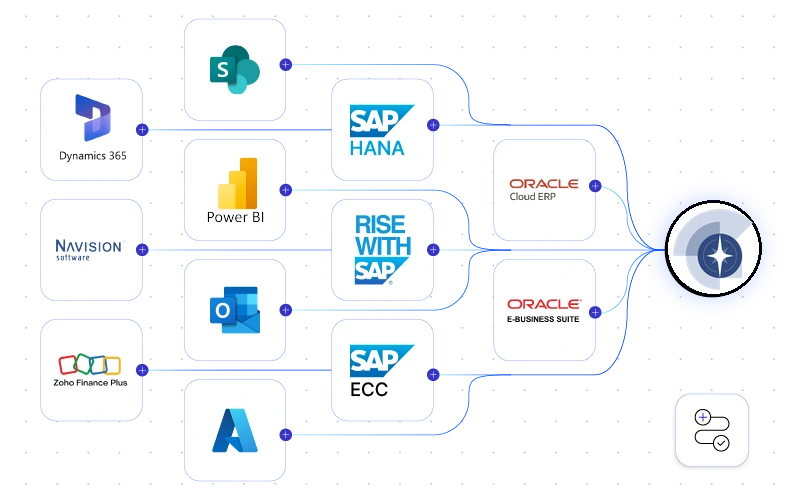
ERP-connected procurement modernizes the experience around the system of record rather than forcing an enterprise to replace the core. It connects requests, decisions, workflows, people, and evidence to the ERP and other trusted systems so work can move with less duplicate entry and less lost context.
01
The ERP is the core, not the entire experience
Enterprise resource planning systems are built to support the record of business activity. They are essential to finance, purchasing, inventory, and operational control. But the people who create demand, evaluate suppliers, review contracts, or resolve exceptions may work across many systems and roles before a transaction reaches the core.
ERP-connected procurement recognizes that difference. The goal is not to pull every human interaction into one system. The goal is to keep the core record reliable while giving each participant a clearer path through the work around it.
02
Connect the moments that matter
Integration projects can become lists of endpoints. A more useful approach starts with the moments the business needs to coordinate: a request becoming a requisition, a supplier decision becoming an approved relationship, a contract obligation becoming a buying rule, or a receipt becoming invoice-matching evidence.
For each moment, define the source of truth, the owner, the data that must move, the event that triggers the next step, and the exception path when the expected handoff does not happen.
- Define the record of authority for each important object.
- Move only the data and context required for the next decision.
- Make status and exception ownership visible across the handoff.
- Keep identity, permissions, and audit history consistent.
03
Design around ownership, not just data
A technically connected process can still feel broken if no one knows who owns the next move. Requesters, buyers, finance teams, IT, suppliers, and business owners need a clear role in the flow, even when the underlying data travels between several systems.
This is where orchestration becomes practical. It provides the routing, visibility, and process context that helps people understand what the system needs from them and what happens after they act.
04
Protect the core with a governed extension layer
The best extension layer is not a shadow ERP. It should have a deliberate relationship with the systems of record: clear integration contracts, controlled configuration, appropriate access, and a way to reconcile exceptions back to the authoritative record.
That relationship lets the enterprise improve the experience without creating a second version of the truth. It also gives IT and procurement a shared language for deciding what belongs in the core, what belongs around it, and what should remain with a specialist system.
05
A practical readiness checklist
Before connecting another workflow, ask whether the organization can explain the process in terms of decisions and handoffs. If the answer is unclear, more technology will not resolve the ambiguity. The first job is to make the operating model legible.
A practical starting checklist includes the systems involved, the process boundary, data ownership, user roles, security requirements, integration events, exception paths, and the evidence leaders need to review performance.
Frequently asked questions
Clear answers for the next conversation.
Does ERP-connected procurement require an ERP replacement?+
No. ERP-connected procurement is about improving the workflows and experiences around the existing system of record while keeping the data and financial controls that the enterprise depends on.
What should be integrated first?+
Start with a workflow where a clear handoff will remove meaningful friction, such as intake to requisition, supplier onboarding to approval, contract obligation to buying, or receipt to invoice matching.
What makes a procurement integration sustainable?+
Clear ownership, defined data authority, governed access, reliable exception handling, and an agreed boundary between the core ERP and the surrounding workflow layer make integrations easier to operate over time.
VendrNova connects the work from first request to final payment so enterprise teams can move with more context and control.
Explore the platform