

Quick answer
Procurement intake is the front door for business demand. A strong intake experience makes it easier for employees to ask for help, captures the context procurement needs, and routes the request to the right path before uncertainty becomes rework downstream.
01
The first procurement moment sets the tone
For many employees, procurement begins with a question: “How do I get this done?” If the answer is a long form, an unclear inbox, or a search through policies, the process feels like a barrier before the business need has even been understood.
That first experience shapes adoption. When the front door is clear, employees are more likely to use the approved path and provide useful information. When it is confusing, demand moves to side channels, and procurement has to recover the context later.
02
Intake is more than collecting fields
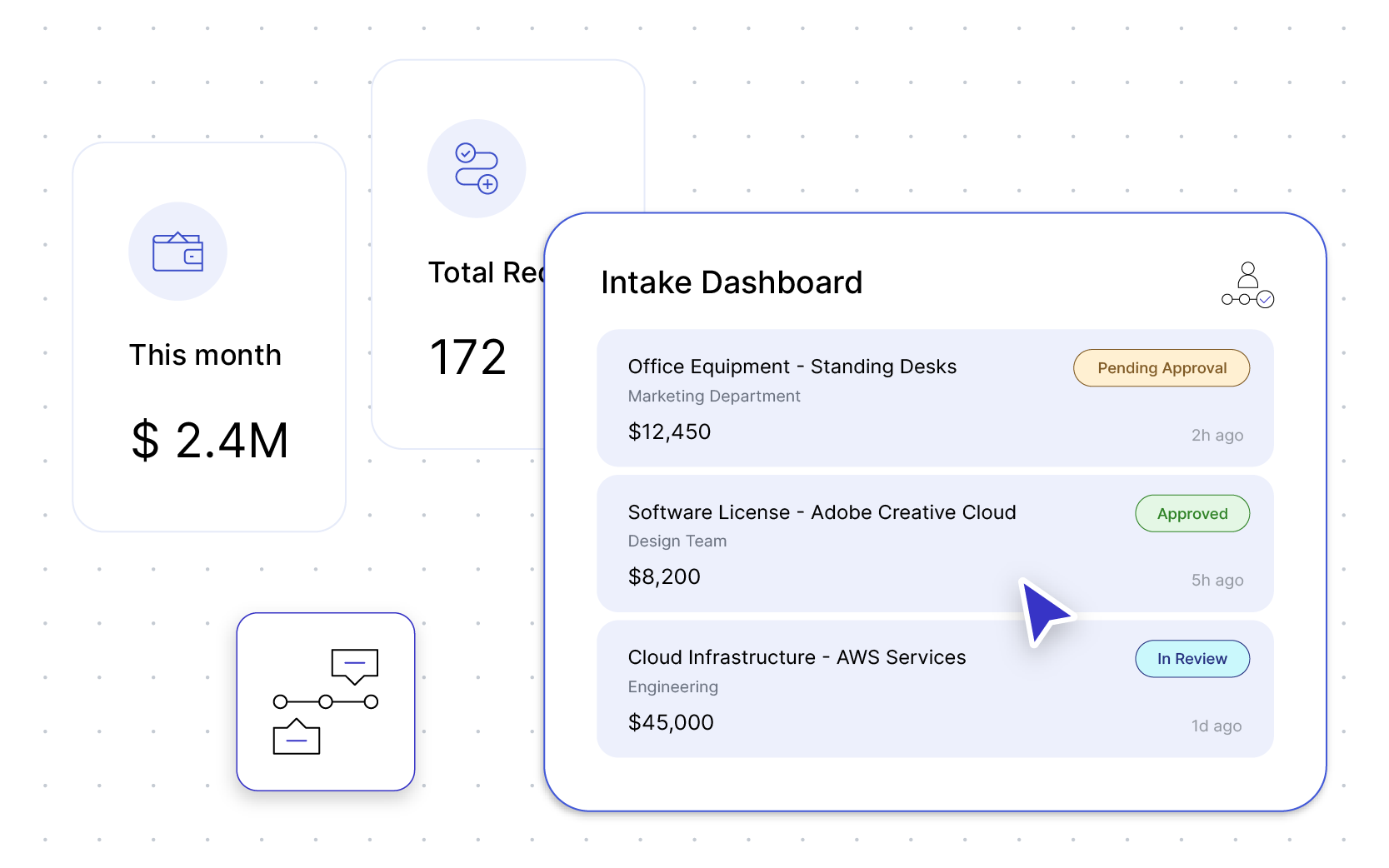
A request should do more than record a title and an estimated amount. It should help the organization understand what the business is trying to achieve, how quickly it needs an answer, which stakeholders are involved, and what kind of process the request may require.
That does not mean asking every requester to become a procurement expert. The experience can use plain-language prompts, guided questions, reusable paths, and progressive detail so the request becomes more complete without feeling heavier.
- Business need and desired outcome
- Timing, location, entity, category, or project context
- Expected supplier involvement, risk, data, or compliance considerations
- Budget, approval, and stakeholder information where it is known
03
Guide people without hiding the control model
A good intake experience makes the right path understandable. It can route a standard request toward a catalog or purchase path, identify when sourcing support is needed, or bring legal, security, finance, or risk stakeholders into view when the situation calls for them.
The point is not to turn every decision into an approval maze. It is to make the policy and ownership logic visible early enough that the requester does not discover it after work has already started.
- Use clear paths for common requests.
- Ask different questions based on the type of need.
- Show who will review the request and why.
- Give the requester a visible next step and status.
04
Carry the request forward
The value of structured intake compounds when the request becomes the starting record for the next team. Procurement should not have to ask the requester to repeat the business need during sourcing. A supplier team should not have to reconstruct the decision when onboarding begins. Finance should not be separated from the commitment context when an invoice arrives.
Carrying context forward does not mean carrying every field forever. It means preserving the information that explains the decision and makes ownership clear as the work changes hands.
05
Measure momentum by the quality of the handoff
The most useful intake measures are not limited to completion rates. Leaders should also ask whether requests arrive with enough context, whether they reach the right path, how often they are redirected, and where people leave the governed process.
Those signals show whether intake is doing its real job: helping the business move quickly while giving procurement a dependable place to begin.
Frequently asked questions
Clear answers for the next conversation.
What should a procurement intake form capture?+
It should capture the business need, desired outcome, timing, organization or project context, stakeholders, likely category or supplier path, and any risk, approval, budget, or compliance details relevant to routing the request.
How does procurement intake improve adoption?+
It gives employees a clear, understandable way to ask for help and shows what happens next. A guided path reduces uncertainty while making the approved process easier to follow.
Should every request follow the same intake path?+
No. Common requests can use simple guided paths, while more complex needs can collect additional context and route to sourcing, legal, security, finance, or other specialists.
VendrNova connects the work from first request to final payment so enterprise teams can move with more context and control.
Explore the platform