

Quick answer
Supplier context changes a procurement decision because a supplier is more than a name on a bid or purchase order. Lifecycle status, qualification, performance, risk, contracts, spend, and relationship history help teams judge whether a choice is workable, resilient, and aligned to the business need.
01
A supplier list is not a supplier operating model
A list can tell procurement which suppliers exist. It cannot, by itself, explain whether a supplier is qualified for a category, ready for a new project, meeting the expected service level, or carrying an unresolved risk that should change the decision.
That missing context is expensive. Teams repeat questions, evaluate suppliers with partial information, and discover issues only after the relationship is already tied to a contract, order, or operational dependency.
02
Bring the supplier story together
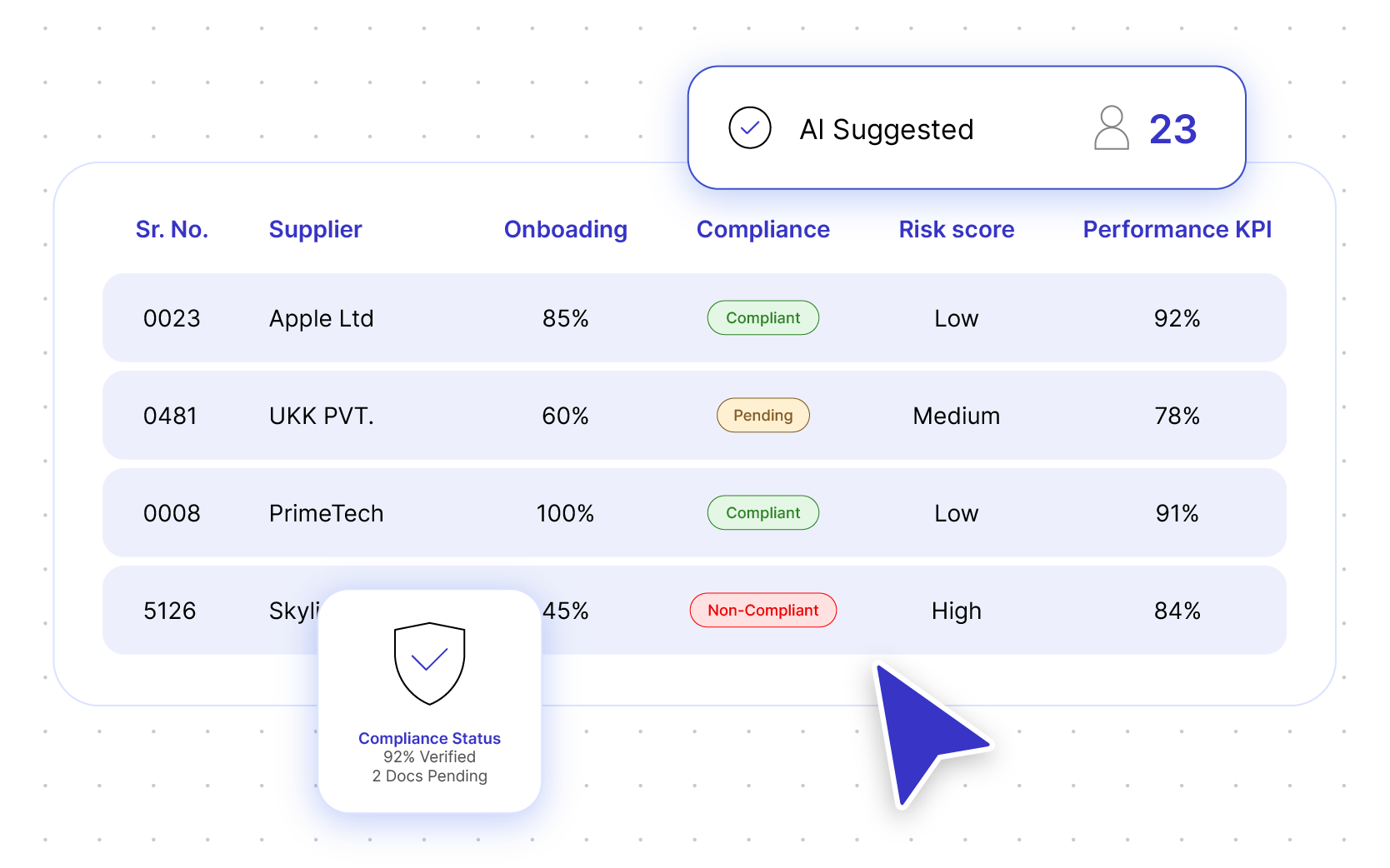
Supplier context is the collection of facts and signals that help a team understand the relationship in its current state. It can include onboarding evidence, qualifications, ownership, categories, sites, contracts, spend, performance reviews, risk actions, and open commitments.
The goal is not to create a record full of information no one uses. The goal is to make the information that changes a decision visible to the people making or operating that decision.
- Who owns the relationship and the next action?
- Is the supplier qualified for the work and geography in scope?
- What performance, risk, contract, or compliance context should be considered?
- What has changed since the last review or decision?
03
Carry context across the supplier lifecycle
Supplier management is not a single event. The information collected during onboarding should help sourcing teams evaluate options, contract owners manage obligations, buyers make compliant choices, and business stakeholders review performance.
That continuity reduces the gap between approval and reality. It also makes it easier to identify when the relationship needs a corrective action, a deeper review, a new negotiation, or a different operating path.
04
Make performance useful, not ceremonial
Supplier reviews can become calendar events that produce a presentation and little change. A more useful review connects performance evidence to the contract, the business owner, open issues, and the action that should follow.
When that context is visible, the conversation can stay specific. Teams can distinguish an isolated service issue from a pattern, recognize a supplier that is creating value, and assign ownership before an unresolved issue becomes a business surprise.
05
Use context to make a confident operating choice
Supplier context does not remove judgment from procurement. It improves the quality of the judgment. Decision makers can see more than price or availability; they can weigh readiness, risk, performance, obligations, and the practical ability to deliver the outcome the business needs.
That is the difference between managing supplier information and managing supplier relationships. The record becomes a working part of the operating model rather than a static compliance destination.
Frequently asked questions
Clear answers for the next conversation.
What supplier information matters most to a procurement decision?+
The most useful context depends on the decision, but often includes qualification, ownership, category and geography fit, performance, risk, contract obligations, spend, open issues, and the supplier’s ability to meet the business need.
How does supplier context support supplier risk management?+
It connects risk evidence and review actions to the supplier, work, owner, contract, and operating history. That helps teams see whether an issue is isolated, unresolved, or part of a larger pattern.
When should supplier performance be reviewed?+
Performance should be reviewed at useful operating moments, such as onboarding, sourcing decisions, contract milestones, recurring business reviews, issue resolution, or a change in the supplier’s scope or risk profile.
VendrNova connects the work from first request to final payment so enterprise teams can move with more context and control.
Explore the platform